What technologies and strategies will mark the transformation of Accounts Payable in the coming months? SAP illustrates IT loud and clear with the combo AI, Data Cloud and Applications, supported and powered by SAP BTP.
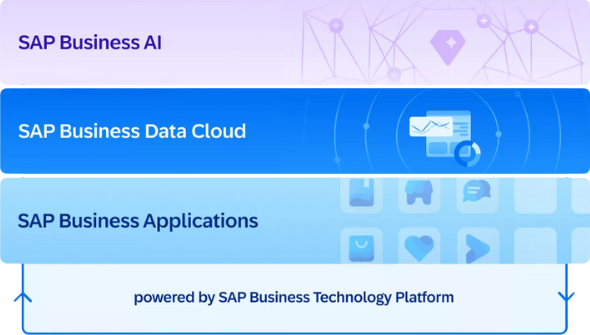
👇Let's look at how these three dimensions relate to each other and to other trends we should address in 2026. 👇
SAP 2026 trends in financial automation and electronic invoicing
With the advances of recent years, we can no longer talk only about Digitize, but in automate end-to-end.
Financial departments seek to reduce the cost per invoice, accelerate closures and obtain real-time reporting, and this is only possible with complete automation of reception, validation, approval and accounting.
How does this translate into SAP:
- Extended use of OpenText VIM for invoice automation.
- Dynamic rules by country/vendor/category.
- Drastic reduction of exceptions through prior validations.
- Integration with payments, treasury and cash forecasting.
- Use of connectors for SAP, for example Invictia, the Brait connector that can be natively integrated.
- SAP Fiori apps specific for approval and resolution of exceptions.
- Improvements with a Clean Core approach and hybrid scenarios with SAP BTP.
The mandatory nature of electronic invoicing will continue to expand in Europe, LATAM, North America and APAC, let's say, around the world.
Companies need a system that is able to adapt quickly to regulatory changes (formats, portals, tax requirements). In addition, this is presented as a magnificent opportunity to integrate automation into obsolete systems which require a lot of manual labor, duplicate tasks and block departmental fluidity and efficiency.
Innovation is no longer just in reading invoices, but in Process them, identifying errors and proposing actions (blocks, sending to the approver, etc.). In other words, we can no longer talk about simple character recognition, but rather about a solution that makes intelligent use of that data. In this case, take them to SAP, cross them, and process all kinds of documents in an automated way.
We will notice it in:
- Error detection before accounting
- Automatic classification of exceptions.
- Tips based on history.
- Automatic enrichment with data from supplier catalogs or materials. (Smart Coding in the particular case of OpenText Vendor Invoice Management / VIM).
All of this leads us to the so famous “touchless”, that is, processing with the least possible intervention.
The trend is clear: create a previous validation and normalization layer (Pre Processing Layer) that filters errors before they reach the ERP to reduce duplicate tasks. This layer is the key to the real Touchless Posting .
The modernization to S/4HANA drives the adoption of more intuitive interfaces.
- SAP Fiori apps specific for approval and resolution of exceptions.
- Mobile-first for quick tasks.
- Real-time operational monitors.
- Executive dashboards for CFOs.
All of this speeds up approvals, provides context and reduces bottlenecks.
Automation is even more effective if it is measured and if that data allows us to make faster and more assertive decisions.
With VIM Analytics and VIM Central Reporting, CFOs and financial managers can manage the AP area as a process factory, with centralized data even in global environments.
Companies are eliminating unnecessary Z developments to protect the SAP core.
The trend will be to extend processes outside the ERP, in SAP BTP and through APIs, which include electronic invoicing and AP automation processes.
Examples:
- Tax validations in BTP.
- Automation of exceptions through workflows.
- Custom Fiori apps without modifying standard SAP.
- Hybrid scenarios integrating for example Invictia + VIM + BTP.
It doesn't make sense for AP to work in isolation. The greatest efficiency comes from integrating Purchases, Contracts, Receipts, Documentary Management, Payments and reconciliation.
Example: Invoice automation + Bank reconciliation + integrated document management OpenText VIM, Embat and OpenText Extended ECM where teams can group, centralize and organize all relevant information in a structured way, all in their SAP.
Do you want to change your financial department this new year?
At Brait, we are experts in SAP technologies and we help companies to get the most out of their ERP through improvements such as:
- Automating the billing cycle.
- Global regulatory compliance for electronic invoicing.
- Optimization of P2P processes in SAP.
- Solutions of digital signature and secure digital identity.
- Intelligent document management.
- Tools for CFO's and financial ones such as VIM Analytics, SAP BTP, SAP Fiori, etc.
📧Do we adapt it to your case? Request an evaluation without commitment.
.jpg)